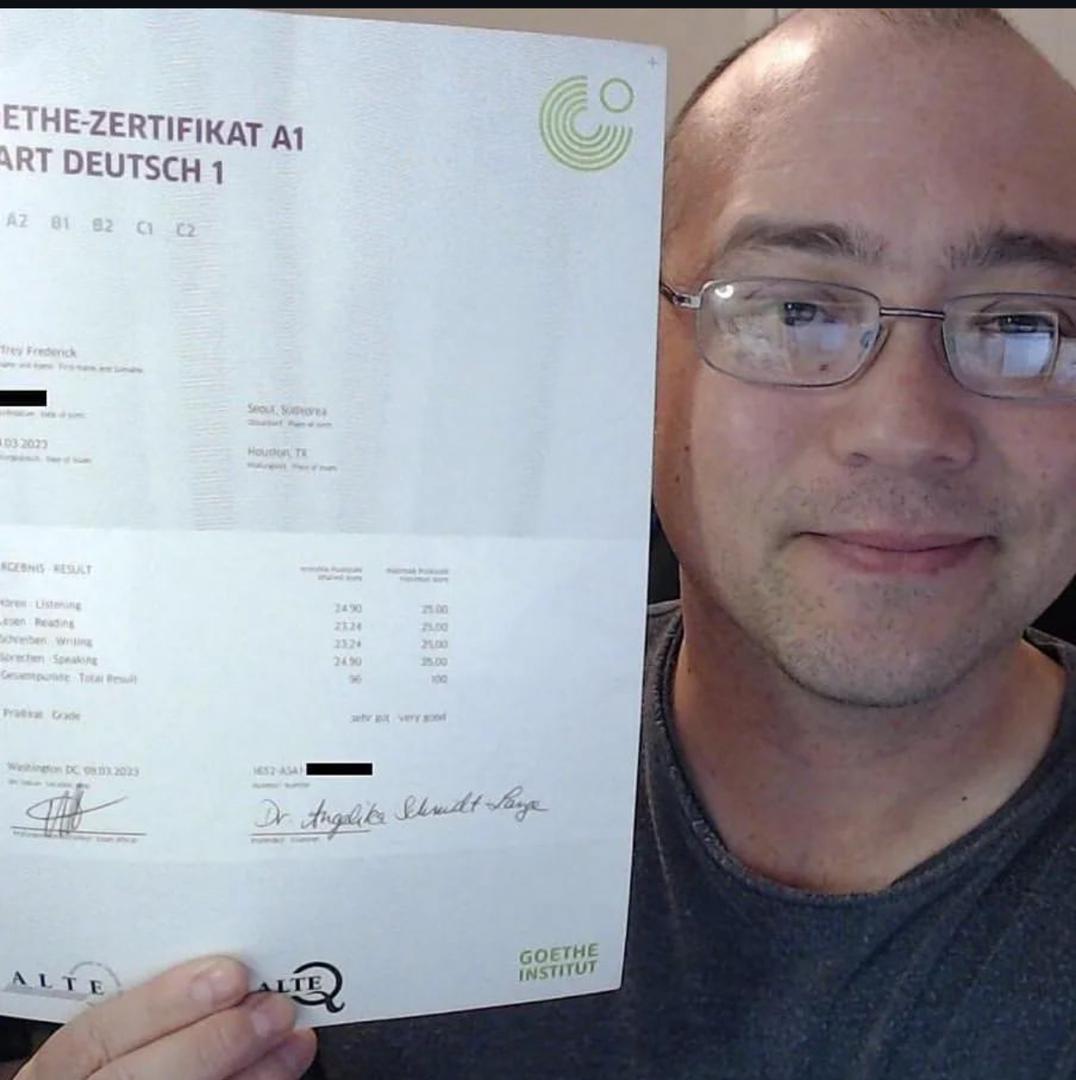
14 Misconceptions Commonly Held About Buy A1 German Certificate
Understanding the Benefits of Obtaining an A1 German Certificate
In today's globalized world, being multilingual is a significant advantage. Learning German, in specific, opens doors to numerous opportunities, whether for travel, career advancement, or education. One of the fundamental actions for anyone aiming to develop their proficiency in the German language is getting an A1 German Certificate. This post will look into what the A1 accreditation involves, its significance, the process of obtaining it, and common concerns surrounding it.
What is the A1 German Certificate?
The A1 German Certificate is a main certification that shows fundamental competency in the German language. It is granted to people who have completed the preliminary level of a structured German language program. The A1 level is the first tier in the Common European Framework of Reference for Languages (CEFR), which classifies language proficiency into six distinct levels (A1 to C2).
A1 Level Proficiency Skills
Below are the abilities anticipated from people who obtain an A1 level accreditation:
Skill Area
Description
Listening
Can comprehend familiar everyday expressions and really standard expressions aimed at pleasing concrete needs.
Speaking
Can use simple phrases and sentences to reveal basic needs.
Checking out
Can understand familiar names, words, and very easy sentences, for example, on notices and posters or in brochures.
Composing
Can compose a short, easy postcard, for example, to send out holiday greetings.
Why is the A1 German Certificate Important?
The A1 German Certificate serves not just as a showing ground for language students but also brings numerous useful advantages:
Foundation for Further Learning: Achieving A1 efficiency offers students with a strong foundation for progressing to greater levels (A2, B1, etc).
Enhancing Employment Opportunities: Many employers in German-speaking countries or companies with German clients favor prospects with a standard understanding of the language. The A1 certificate acts as a formal acknowledgment of this proficiency.
Increased Confidence: Successfully obtaining the A1 certificate can enhance a learner's self-confidence, encouraging them to continue their language journey.
Migratory and Visa Requirements: Some migration procedures for German-speaking countries require proof of standard language efficiency.
Social Integration: A fundamental understanding of the language can boost social interactions, helping students navigate life in a German-speaking environment.
Process of Obtaining the A1 German Certificate
Accomplishing an A1 German Certificate usually includes a few simple actions:
Enroll in a Language Course: Many organizations use German language courses tailored to beginners. It's essential to pick accredited programs that prepare trainees for certification.
Research study Regularly: Dedication to routine research study is vital. This consists of practicing speaking, listening, reading, and composing.
Mock Tests: Numerous practice tests are offered online. Taking mock tests will assist learners understand the exam's format and identify locations needing enhancement.
Register for the Exam: Once prepared, prospects can sign up for the A1 certification exam. It's important to inspect the registration due dates and exam dates.
Get ready for the Exam: It's useful to examine all elements of the language, focusing particularly on the areas emphasized in the A1 level.
Take the Exam: The exam usually consists of 4 parts: Listening, Reading, Writing, and Speaking. After the exam is completed, candidates may receive their results within a few weeks.
Typical Exam Structure
The A1 German exam usually follows this structure:
Component
Duration
Weight (%)
Listening
20 minutes
25%
Reading
Thirty minutes
25%
Writing
20 minutes
25%
Speaking
15 minutes
25%
Common FAQs About the A1 German Certificate
1. Who is qualified for the A1 German Certificate?
There are no stringent eligibility requirements. Anyone thinking about finding out German can pursue this accreditation, consisting of total novices.
2. How long does it require to prepare for the A1 exam?
Preparation time differs based on private language discovering abilities. Typically, learners may need 60 to 80 hours of instruction and additional self-study.
3. Where can I take the A1 German exam?
The A1 exam is provided by numerous language schools and main exam centers worldwide. Some prominent organizations include the Goethe-Institut and TELC.
4. What resources are suggested for studying for the A1 exam?
There are numerous language apps, websites, textbooks, and online courses particularly created for A1 level preparation. Popular books include “Schritte International” and “Menschen.”
5. What takes place if I stop working the exam?
If a candidate does not pass the A1 exam, they can retake the exam after a suitable period of preparation. There's no limitation on the variety of attempts.
6. Is the A1 German Certificate acknowledged internationally?
Yes, the A1 certificate is extensively recognized, especially in German-speaking countries, as proof of one's fundamental language abilities.
Obtaining an A1 German Certificate is a substantial milestone for anybody embarking on their journey to master the German language. This certification not just supplies students with the confidence that comes from official recommendation of their abilities however likewise equips them with important tools to browse the world around them. Whether for personal satisfaction, expert improvement, or academic aspirations, the A1 certificate acts as an entrance to deeper engagement with the German language and culture.
As the world continues to develop, accepting the opportunity to discover languages such as German is a good pursuit that can pay dividends in countless ways. Therefore, for Geothe Zertifikat 4 All thinking about starting into discovering German, protecting the A1 German Certificate is undoubtedly a worthwhile objective.